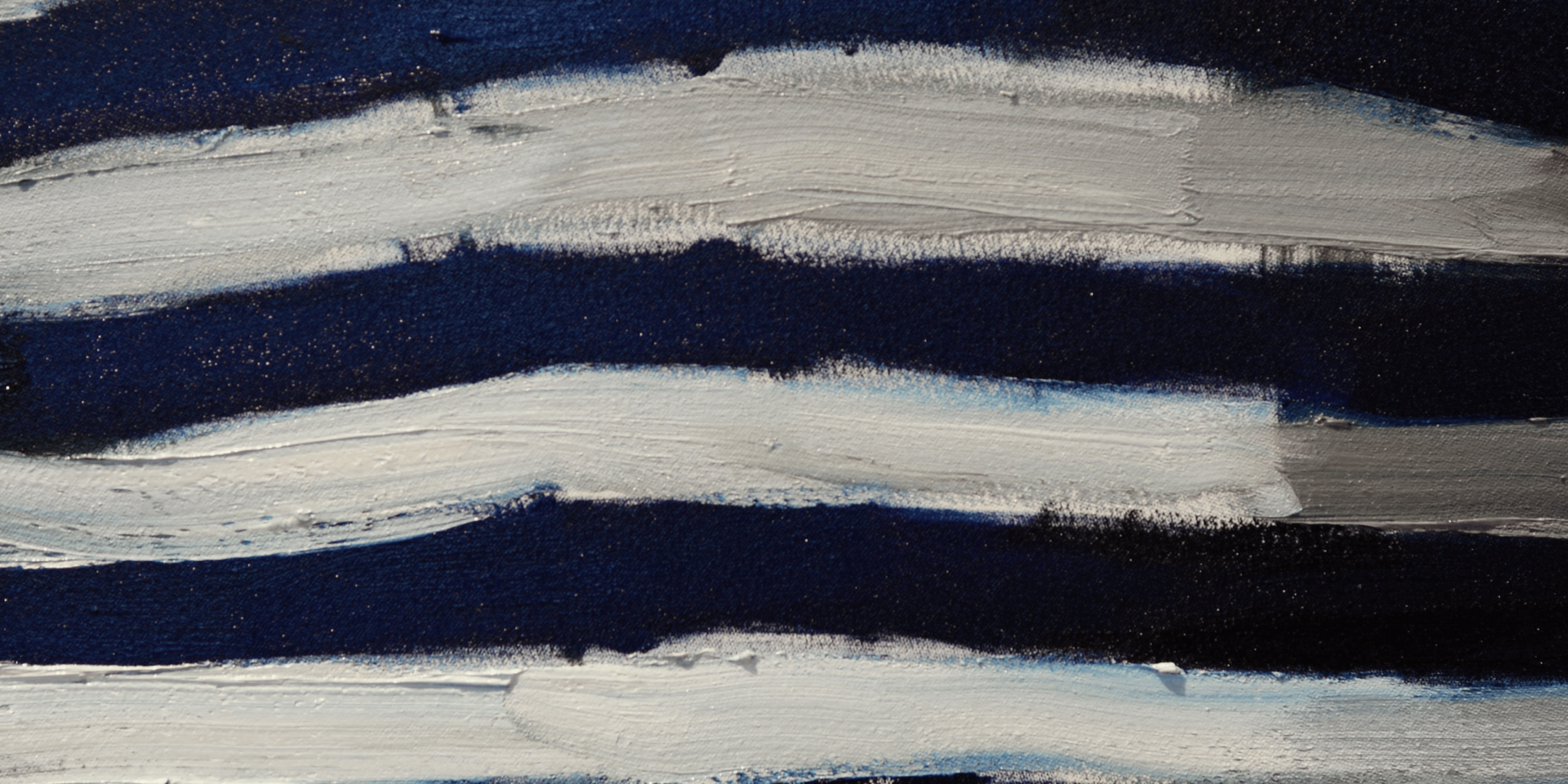
When we think of French iconic objects, the blue and white stripes of a Breton shirt or marinière, immediately come to mind. From the French Navy’s uniform to the humble holiday shirt, and Jean-Paul Gaultier’s collections, the striped jersey seems to be in the wardrobe of every French person or Francophile! It is true that, in fashion, the eye seeks out a striped garment over a plain one. However, the stripe has not always had good press! The Stripe in the Middle Ages Indeed, in the Bible the stripe is the devil’s cloth: “Thou shalt not sow thy field with seed of two sorts”. According to Michel Pastoureau, an expert in Western symbology, the stripe is “the discriminatory mark par excellence, the one that is most visible and that underlines with the most force the transgression […] of the social order”. In the early Middle Ages, laws established that striped clothing should be imposed on bastards, serfs, convicts. It was then extended to all those who were outcast, either because of a conviction (forgers, false traders, perjurers, criminals), or because of an infirmity (lepers, simpletons, lunatics), or because they exercised an infamous profession (jugglers, prostitutes, executioners), or because they were not or no longer Christian (Muslims, Jews, heretics). All these individuals transgressed the social order, as the stripe transgresses the chromatic order. Similarly, spotted or striped animals attracted suspicion: it was said that horses lacking plain coats devalue those who ride them. The stripe’s rise in popularity Since the Renaissance, however, though remaining a strong social marker, the stripe gradually loses its diabolical connotation. It is used to distinguish all domestic subordinate functions (for example the caricatural striped vest of the butler) and military (uniform). At the same time, a vertical “aristocratic stripe” developed, which was found on the sleeves and shoes of young Italian noblemen or kings such as Henry VIII. Similarly, the zebra has benefited from the progressive revaluation of the stripe. The Revolutionary stripe According to Pastoureau, the Revolution constituted a turning point in the history of the stripes. The stripe was indeed prized by American revolutionaries and became the symbol of freedom and revolution. We can still observe its resonance today as attested by the flag with the thirteen red and white stripes – the 13 colonies of America insurging against the British crown. Our French revolutionaries also borrowed this motif, a patriotic sign par excellence, and used it in all the emblems of the Revolution. Stripes of the 19th Century Then a new meaning emerged for stripes: the hygienic stripe. While it had been inconceivable in Western civilisations to wear a body linen other than ecru or white, for reasons of both modesty and purity, changes appeared around 1860 in Anglo-Saxon countries. Colour began to emerge (for body linen, toiletries and later sheets) through the stripes. This hygienic stripe, which purifies the color while brightening the white, has of course nothing to do with the vulgar and negative stripe inherited from the Middle Ages. Similarly, under the impulse of Queen Victoria who dressed her son Edward, the Prince of Wales, in a sailor suit, the stripes were adopted for children. Rapidly all aristocratic and middle-class families in Europe fell in love with the striped knitting. The stripe today A rhythmic, dynamic motif, stripes became more and more democratic. The French striped jersey also inspired leading fashion designers such as Coco Chanel. Adopted by intellectuals and artists, such as Picasso, the Breton shirt gives a sense of Frenchness – attention-catching, freedom, and fun! Still curious? If you are interested in finding out more about the history of the French striped shirt why not pick up a copy of Michel Pastoureau’s The Devil’s Cloth. A History of Stripes and Striped Fabric ? To hear Prof Véronqiue Duché discuss other French cultural clichés book a ticket to Les Lumières bleu.
This is a subtitle for your new post
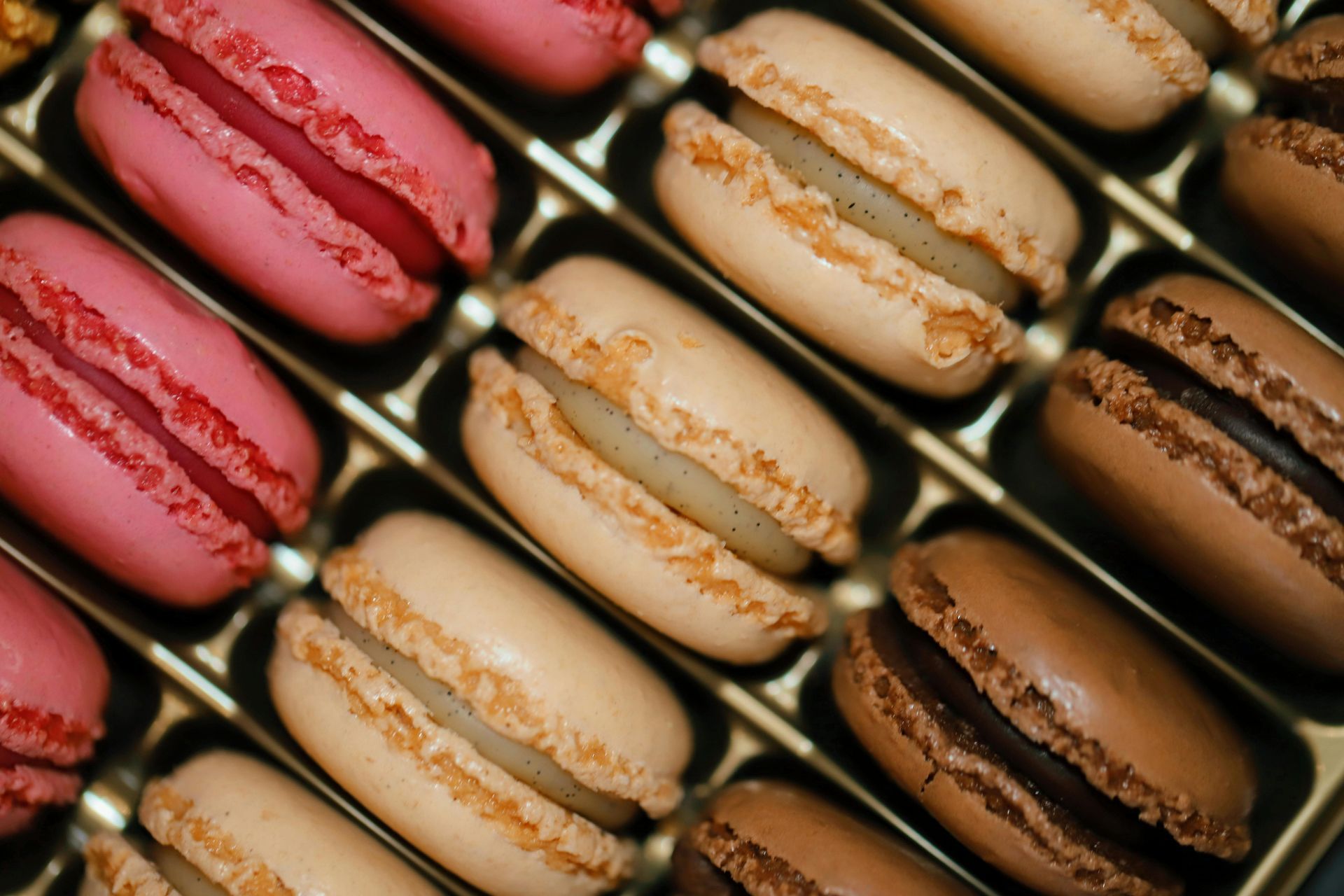
Did you know that Ladurée sells over 4 million macarons? That’s just short of the population in Melbourne! History The Macaron first originated in 8th-century Venice where it was popular in monasteries. It was brought to France during the Renaissance by Catherine de Medici when she married Henry II of France; the pastry chefs she brought with her would make them for her in the palace! Macarons did not gain popularity, however, until the end of the 18th century when a convent near Cormery began making them. When the convent was closed because of the Revolution, two nuns that had sought asylum in Nancy decided to bake and sell these pastries in order to pay for their accommodation. Suzanne-Marguerite Gaillot et Marie-Elisabeth Morlot became known as the “Macaron Sisters” – what savvy entrepreneurs! The macaron we know today is different from those of the past. It wasn’t until the 1930s that the crispy discs were sandwiched together with ganache, cream or other fillings. These days, who could imagine a macaron as only a pair of crispy discs? The new macaron was known as the “Paris macaron,” and Pierre Desfontaines de Ladurée is credited as one of its creators. No wonder they sell 4 million a year! The Modern Macaron Today, the macaron is the most popular dessert in France and the flavours get more creative by the day. Whilst some of the more common flavours, such as rose and chocolate (of course), are very popular, so are the more bizarre filling choices, like foie gras, Cheetos and even Vegemite! Nowadays, macarons have also become part of fashion Haute Couture. Indeed, Ladurée and other Parisian macaron-makers frequently collaborate with brands, such as Emilio Pucci and Christian Louboutin, who design boxes because macarons aren’t just a culinary wonder, but also an aesthetic luxury. They deserve as much attention as high fashion clothing and handbags – of course! Moreover, whilst your average macaron can be bought for only a few dollars, Haute Couture macarons can go for more than $7,000 a box! The iconic Pierre Herme offers these macarons which are bedazzled with the finest and most luxurious ingredients, such as fleur de sel, red grape and fine balsamic vinegar. A macaron may simply be a delicacy to some, but there is a lot more behind it! If by now you are craving a delicious, pillowy-soft macaron to get over those winter blues, look no further… We may not be able to go to Paris at the moment, but let Paris come to you! You can find marvellous macarons (without that Haute Couture price tag) right here in Melbourne: La Belle Miette Luxbite Lindt Chocolate Cafe Ganache Chocolate